What does it actually take to deter a war?
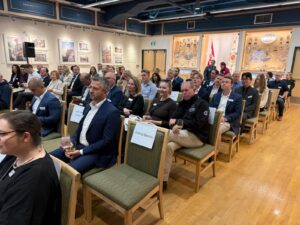
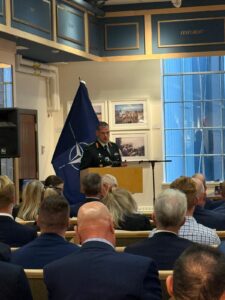
That question ran through our GCBA evening at the Seaforth Armoury in Vancouver, where we brought together business leaders, military representatives and experts on European and international security for a discussion on Canada’s and Germany’s role in Europe’s security architecture.
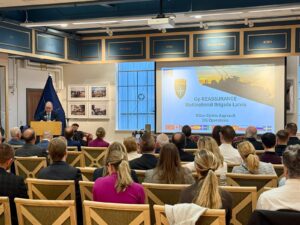
Prof. Alexander Moens opened the evening with a thought-provoking – and at times unsettling – assessment of the political fragmentation facing the transatlantic alliance. His remarks highlighted a world living at a constant level of alert, and the challenge of adapting NATO to an increasingly uncertain political environment, including the changing role of the United States.
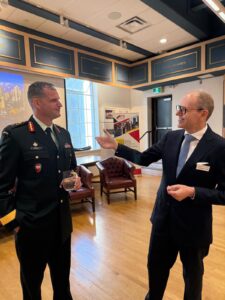
Brigadier-General Cédric Aspirault then gave us a remarkably candid look at what it means to lead a multinational brigade in Latvia. One of the biggest takeaways was the sheer amount of logistics involved in deploying people and material — and the complexity of coordinating forces from 14 nations. Deterrence is not simply about having troops on the ground. It requires planning, infrastructure, supply chains, coordination and sustained commitment.
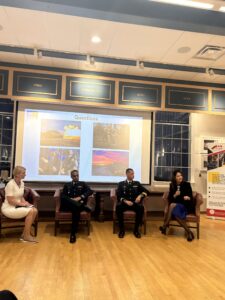
Our panel discussion with Vina Nadjibulla and Lt. Col. Vincent Virk brought another important perspective: we cannot look at Europe, North America and Asia as isolated actors. Developments in one region increasingly affect security, economies and strategic decisions in another.
And perhaps the most important takeaway of the evening was this: successful deterrence requires the resilience of an entire nation. It reaches far beyond the military — into infrastructure, industry, technology, supply chains, government and ultimately the business community.
This is exactly the kind of conversation the GCBA aims to facilitate: connecting our business community with high-level perspectives from politics, diplomacy and the military, and creating a space where these worlds can learn from one another.
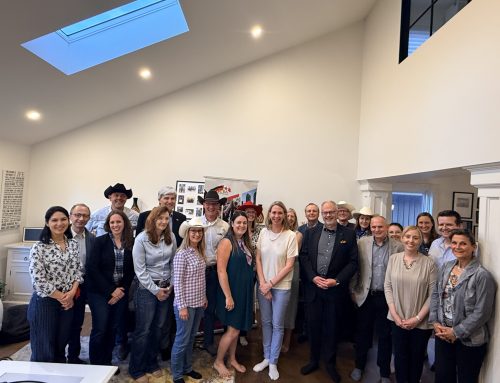
The evening also showed the strength of bringing people together in person. The discussion continued well beyond the formal program, with an exceptionally engaged networking reception — and we were delighted to welcome new members to the GCBA as a result.
A sincere thank you to our partners at Konrad-Adenauer-Stiftung Canada, Andrea Basche, Alexandra Richards and Alexander Jecht for making the evening possible, to Prof. Alexander Moens, Brigadier-General Cédric Aspirault, Vina Nadjibulla and Lt. Col. Vincent Virk for sharing their expertise, and to the team at Seaforth Armoury for hosting us.
Thank you to everyone who joined us and contributed to the conversation.
Written by Franziska Schwarzmann